Article Overview
Residual current protection in secondary distribution boxes ensures safety by detecting leakage currents and disconnecting circuits to prevent electric shocks and fire hazards.
Purpose of Residual Current Protection
Residual current devices (RCDs), also known as residual current circuit breakers (RCCBs) or ground fault circuit interrupters (GFCIs), are designed to detect imbalances between the line and neutral currents, which indicate leakage to ground or unintended paths. This leakage can pose a serious risk of electric shock or fire. RCDs act quickly, typically disconnecting the circuit in less than 30 milliseconds when a leakage current is detected, often in the range of 5–30 mA for human protection .
Application in Secondary Distribution Boxes
In secondary distribution boxes, residual current protection is integrated to safeguard multiple circuits downstream. These devices can be modular (installed alongside miniature circuit breakers) or centralized, depending on the system design. Modern solutions, such as ABB's RD3 and RCQ020 ranges, allow flexible installation with separate toroids for cables or busbars, enabling protection at every point of the low-voltage network . Residual current protection in secondary distribution boxes is particularly important in residential, commercial, and industrial installations, where multiple circuits share a common distribution panel. It ensures that any earth leakage in one branch does not compromise the safety of the entire system .
Technical Considerations
- Sensitivity and Trip Settings: Devices can be adjusted for leakage currents from 30 mA up to 30 A, depending on the protection requirement. High sensitivity is used for human safety, while higher thresholds may protect equipment .
- Selectivity: Combining RCDs with overcurrent protection (RCBOs) allows selective tripping, ensuring that only the faulty circuit disconnects while others remain operational .
- Distributed Protection: Advanced methods divide the distribution network into closed protection surfaces, monitoring residual currents at each section to improve sensitivity and reduce false trips caused by load fluctuations or inherent network currents .
- Integration with Monitoring Systems: Some devices provide pre-alarm signals when leakage currents approach critical levels, allowing preventive maintenance and reducing the risk of unexpected faults .
Benefits
- Enhanced Safety: Protects humans from electric shock and reduces fire risk due to earth faults.
- System Reliability: Minimizes unnecessary power interruptions by isolating only the affected circuit.
- Maintenance Planning: Early detection of insulation degradation allows timely intervention. In summary, residual current protection in secondary distribution boxes is a critical safety measure that combines rapid fault detection, selective tripping, and monitoring capabilities to protect both people and equipment in low-voltage distribution networks .
SENTRON residual current protective devices (RCD)
Achieve space savings with a compact solution for residual current and line protection. Add a SENTRON 5SM6 AFD unit for
How residual current device (RCD) works?
Estimated Study Time: 4 minutes Figure 1 - Residual current device components The residual current device (rcd) is
Electrical Protection and Control
Miniature circuit breakers (MCB) provide protection against short circuits and are rated up to 125A. They can be combined with a
SENTRON Residual Current Protective Devices
As can be seen from the tripping curves, residual current protective devices do not limit the intensity of the residual current but
A Multi-level Current Protection Technology for Distribution
To resolve the aforementioned challenges, this paper introduces a distribution network multi-level current protection technology
Forward to the Basics: Selected Topics in Distribution Protection
Through analysis of event reports recorded by relays, this paper will present several examples of settings that led to unintended
Residual current protection configuration for secondary power
RD series The RD series is designed for leakage current detection, protection and monitoring functions. It is composed by DIN-rail
Residual current protective devices (RCDs)
Residual current circuit breakers with overload protection (RCBOs) include residual current detection and overcurrent protection in

Residual Current Devices
In 1960s, protection with sensitive residual current devices, providing protection even in case of direct contact with live parts, started
RCBO Breakers Explained: How They Work, Wiring
Discover how RCBO breakers protect against overloads and Earth leakages. Learn about
The Meaning and Function of Primary, Secondary, and Tertiary
Tertiary Distribution Box: The system includes a main distribution box, sub-distribution boxes, and switch boxes
All about GFCI/RCD devices
A GFCI (Ground Fault Circuit Interrupter) or RCD (Residual Current Device) is a safety device that is designed to protect against
Coordination of residual current protective devices
Selectivity between RCDs Residual Current Devices are by design very sensitive to fault and shall be coordinated
Enhancing Low-Voltage Distribution Network Safety
This paper systematically analyzes the operating characteristics of low-voltage distribution networks and proposes a distributed
Smart control cabinets Solutions for automating the secondary
Solutions for automating the secondary distribution network r supply requires an increase in automation of the secondary distribution
Secondary unit substations design guide
Because the transformers are not paralleled, secondary fault currents and breaker applications are similar to those on
Siemens RCCB and RCBO Overview | PDF | Electricity
The document is a configuration manual for Siemens'' Residual Current Protective Devices (RCCBs) and Arc Fault Detection Devices
A Multi-level Current Protection Technology for Distribution
This paper proposes a multi-stage current protection tech-nology for distribution networks based on the residual voltage lockout

Residual Current Devices (RCDs)
An accurate protection of people and electrical equipment against leakage currents can be achieved by installing Residual Current
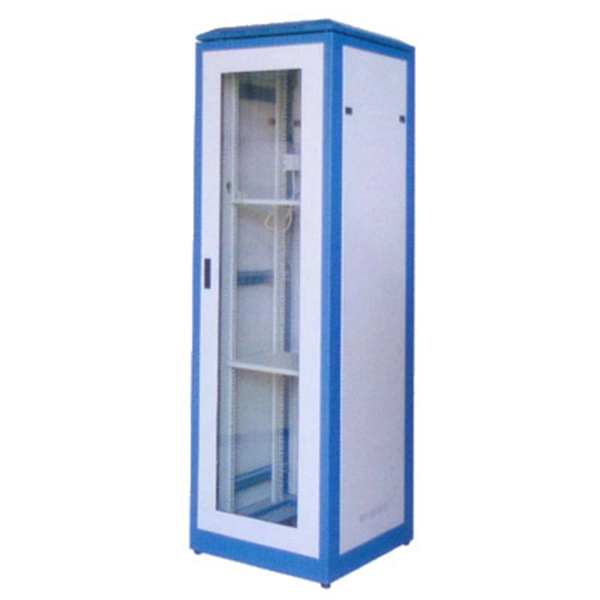
What are the primary, secondary and tertiary distribution boxes?
Primary distribution box: three-phase power supply, ground wire and zero wire are introduced from the transformer. Secondary
What is an RCD (Residual Current Device)?
Residual Current Device or Residual Current Circuit Breaker. Construction, Working, Types, Rating and Applications of RCD, RCB
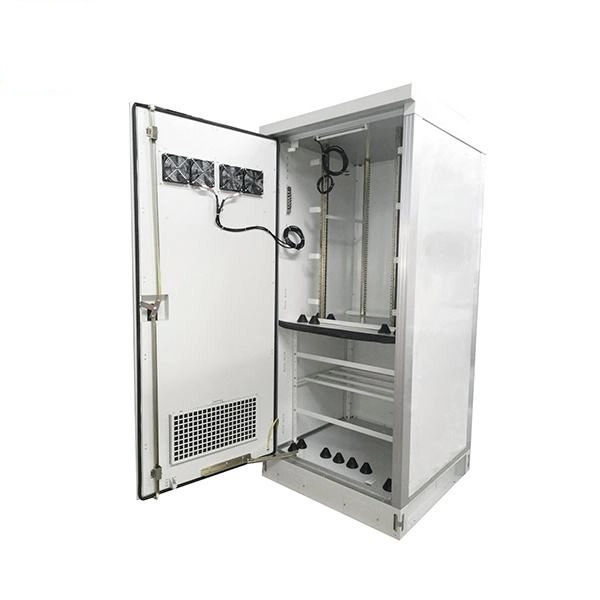
Residual current in the secondary distribution box
Type F residual current protective devices detect all residual current types as do Type A. Additionally, they are suitable for detecting
Eaton
Eaton
WHITE PAPER Residual current devices (RCDs) Protection against
AS/NZS 3000 also requires additional protection in most final sub-circuits by residual current devices to automatically disconnect the
Related Resources
- The output cables of the distribution box are aesthetically pleasing
- SFP optical module bit error rate requirements
- Property Distribution Box Markings
- Egyptian butterfly-shaped drop cable dual-core
- Energy Internet Construction Policy
- Cable tray thickness standard price
- 12-pin horizontal junction box
- Swiss power distribution box configuration
- Industrial Fiber Optic Sensor Accessories
- Construction of Plastic Cable Trays in Indonesia
- Short Cabinet Cable Management Rack
- How much does it cost to clean 1 meter of fiber optic cable